Mexico Backpacking: The Real Fares

Prices checked: October 2026. Every price on this page was checked against the sources listed at the end. Where a figure could not be verified, this guide says so instead of guessing.
Last checked: 13 November 2026. Prices and rules change: the date each figure was read is inside the article.
Introduction
MX$625.
That is not the price of the ruins at Tulum. It is the sum of three separate charges that a foreign adult pays to walk into them on an ordinary weekday, and the official INAH portal prints all three next to each other without ever adding them up.
- MX$210 to the INAH, the federal institute that owns the site, under Categoría I of Article 288 of the Ley Federal de Derechos.
- MX$295 to GAFSACOMM, the state-owned group behind the Tren Maya, for a foreign adult.
- MX$120 to CONANP, the national protected-areas commission, because the ruins sit inside the Parque Nacional de Tulum.
Three collectors, three receipts, one view of the Caribbean. The headline number that most guides quote is only the first one, and it is the smallest.
This is the shape of Mexican backpacking costs, and it is the reason this guide is built out of tickets rather than out of a daily budget. The same visit costs one ticket at Teotihuacán, two at Uxmal, three at Tulum, and the number of windows you queue at changes with the site, the day of the week and the document in your pocket. Get the count right and Mexico is one of the cheapest countries in the Americas.
Get it wrong and you spend a week’s dorm money on one afternoon.
Everything below comes from a published page: the federal statute that sets the entry fees, the official site-by-site portal, the operator’s own fare table, the government’s own admission prices. Nothing is converted, because a conversion would need a rate with its own date.
The ticket that is three tickets
Start with the law, because the law is where the numbers come from and almost nobody reads it. Article 288 of the Ley Federal de Derechos, in the text consolidated by the Cámara de Diputados after the reform published in the Diario Oficial on 7 November 2025, sets four price categories for every federal museum, monument and archaeological site in the country:
| Category | What the statute prints | What you actually pay | Sites a backpacker will meet |
|---|---|---|---|
| Categoría I | MX$209.09 | MX$210 | Teotihuacán, Monte Albán, Mitla, Palenque, Tulum, Templo Mayor, Museo Nacional de Antropología, Cobá, El Tajín, Calakmul, Bonampak, Yagul |
| Categoría II | MX$156.75 | MX$155 | Toniná, Malinalco, Kabah, Tlatelolco, Comalcalco |
| Categoría III | MX$143.69 | MX$145 | Labná, Sayil, Loltún, Oxkintok, Chalcatzingo |
| Categoría IV | MX$104.50 | MX$105 | Chichén Itzá, Uxmal, Dzibilchaltún |
| Any category, after normal opening hours | MX$731.84 | MX$730 | A private visit, if the site authorises one |
Two mechanical rules explain the difference between the first column and the second, and both are in the law. The statute rounds these fees to multiples of five pesos, and where a figure sits exactly between two multiples it drops to the lower one. Article 6 of the same law handles everything else: centavos from 1 to 50 round down, 51 to 99 round up.
That is why MX$209.09 appears on the gate as MX$210 and MX$731.84 as MX$730, and it is a useful test of any price list you read online: if the number is not a multiple of five, it did not come from the official schedule.
Categoría IV is new. It was added to the statute by the same November 2025 reform, and it is the reason Chichén Itzá and Uxmal are cheaper than Teotihuacán at the federal window — MX$105 against MX$210. It is also the reason they are not cheaper at all once you add the second ticket.
The rules that decide who pays
The statute then does something that decides most of your entry costs in Mexico, and it turns on a word. Article 288 exempts visitors on Sundays — but only “los visitantes nacionales y extranjeros residentes en México”, Mexican nationals and foreign residents.
It exempts students and teachers with valid ID, under-13s, over-60s, pensioners, people with disabilities, INAH-accredited researchers and members of indigenous communities in neighbouring municipalities — and the INAH’s own press note of 18 August 2025 adds the qualifier that decides your case: those exemptions apply “siempre y cuando sean mexicanos o extranjeros residentes en México”.
So the free Sunday is not free for a tourist on a 180-day stamp. The INAH portal is blunt about it: on the Teotihuacán page the condition is listed in four words — “Domingos gratis (mexicanos)”.
The second paragraph is where the doubling comes from. Nationals and foreign residents who can prove it get a reduction — 50% in Categoría I, 45% in Categorías II and III — and that is exactly how the portal arrives at MX$105 for a Mexican adult at Teotihuacán while a visitor pays MX$210. Categoría IV has no percentage at all, which is why Chichén Itzá and Uxmal print MX$105 for everyone. Proof is the point:
the reduction is for people who can “acrediten su nacionalidad y residencia”, and a tourist entry stamp is not a residency document.
One more carve-out: the exemptions and the reductions “no será aplicable … en las visitas después del horario normal de operación”. Everybody, of every nationality, pays MX$730 for an out-of-hours visit.
The second and third tickets
The federal fee is only one collector, and the INAH portal lists the others on the same page, under the heading “Otras cuotas”. These are the numbers a daily budget actually turns on:
| Site | Federal (INAH) | Second ticket | Third ticket | Foreign adult, weekday |
|---|---|---|---|---|
| Teotihuacán | MX$210 | — | — | MX$210 |
| Monte Albán (site museum included) | MX$210 | — | — | MX$210 |
| Mitla | MX$210 | — | — | MX$210 |
| Palenque | MX$210 | CONANP general MX$215 (residents MX$110) | — | MX$425 |
| Uxmal | MX$105 | CULTUR MX$481 (nationals MX$269; Yucatán residents exempt) | — | MX$586 |
| Chichén Itzá | MX$105 | CULTUR MX$571 (nationals MX$198; Yucatán residents exempt) | — | MX$676 |
| Tulum | MX$210 | GAFSACOMM MX$295 (nationals MX$195; Quintana Roo residents MX$45; Tulum residents free) | CONANP general MX$120 (residents MX$60; students and teachers MX$30) | MX$625 |
Read that table twice, because it inverts the ranking. Teotihuacán is the most expensive federal ticket in the country and the cheapest day out, because you pay once. Chichén Itzá is the cheapest federal ticket and the most expensive day out — the INAH page carries a line above the price that says so:
“Adicionalmente a la cuota de admisión se debe cubrir una cuota extraordinaria del Gobierno del Estado de Yucatán.” Uxmal, twenty minutes of motorway away, is MX$90 cheaper than Chichén for the same two-window structure, and almost nobody mentions it.
One warning about those two Yucatán rows, because they are the shakiest numbers in this guide. INAH’s own site page for Chichén Itzá — the page this article reads for everything else — still prints the state charge as $548 for foreigners and $190 for nationals, and its Uxmal page is stale in the same way.
But CULTUR, the Yucatán state trust that actually collects that fee, raised its 2026 tariff, and every Yucatán news outlet that reported the increase published the same breakdown: MX$105 to INAH plus MX$571 to the state, a total of MX$676. El Heraldo de México printed the components on 15 January 2026: *”la tarifa del INAH, que es de 105 pesos para mexicanos y extranjeros;
y la del Patronato Cultural estatal, que es de 198 pesos para nacionales y de 571 pesos para quienes vienen de otros países.”* National totals moved with it: MX$303 for a Mexican (105 + 198), and MX$105 for a Yucatecan, who is exempt from the state charge.
So the table above uses the figure the state itself charges, not the one the federal page has not yet updated. And there is a third number to know: CULTUR’s own site, read in October 2026, now sells a single bundled ticket at MX$697 for foreign adults — the same fee, collected at one window instead of two. Chichén Itzá moved to a boleto único in March 2026 precisely because two queues at one pyramid was a bad look.
If you want the number you will actually be asked for at the gate today, it is MX$697; if you want the itemised breakdown, it is 105 + 571. What it is not is MX$653, which is what this article printed in its first draft — the arithmetic of a federal page that had gone out of date.
The portal also prints a floor under each site: free admission for state residents at Chichén Itzá and Uxmal, free for Tulum residents at Tulum, and reduced Quintana Roo rates at the GAFSACOMM and CONANP windows. If you have a Mexican residency card, the whole table collapses.
The camera, in plain numbers
Three official documents settle this, and none of them is a rumour.
- Personal photos are free. INAH bulletin 345, dated 17 June 2024, states that at no site under its custody “está prohibido el acceso del público con dispositivos de uso personal, como celulares, tabletas electrónicas y cámaras fotográficas no profesionales”, and that “no existe prohibición para que las personas puedan tomar imágenes para uso personal”.
- Commercial videography with a phone or a compact camera costs MX$60. The same bulletin: “Solo en aquellos casos donde la toma de imágenes y/o videos con cámaras no profesionales tienen una finalidad comercial, el interesado deberá cubrir una cuota de $60.00 (sesenta pesos)” — and it adds that these charges sit on top of the Ley Federal de Derechos.
- Professional or special equipment needs a permit, and the permit is priced per day. The figure is in the law itself, not in a schedule attached to it. Article 288-D of the Ley Federal de Derechos — the article that creates the permit in the first place — sets the fee at MX$15,915.57 a day for filming or videography and MX$7,957.68 a day for still photography, and it says that public institutions devoted to the promotion, teaching or research of culture, science or art pay 40% of the filming rate and 60% of the photography rate. Those are the statutory figures behind the MX$15,916, MX$7,958, 40% and 60% this guide prints.
That is the “cuota por cámara profesional” that appears in the conditions list on the Tulum and Palenque pages. It is a production fee, not a tourist fee, and it is why a phone in your pocket is not the same object as a camera bag.
When the sites are open, and what late costs
Every site page prints its own hours, and they are shorter than most people assume:
- Chichén Itzá: Monday to Sunday, 08:00 to 16:00, last access 15:00, with preferential attention for agencies from 11:00 to 14:00.
- Uxmal: 08:00 to 16:00, last access 15:00.
- Teotihuacán: 08:00 to 17:00, last access 16:30.
- Monte Albán: 08:00 to 17:00, last access 16:00.
- Mitla: 08:00 to 17:00, last access 16:30.
- Tulum: 08:00 to 17:00, last access 15:30.
The last-access time, not the closing time, is the number that matters if you are arriving on an afternoon bus. And the MX$730 out-of-hours fee is the only way to be inside after the gates shut.
Crossing the border: the paperwork comes first
Four passports, one answer. US, UK, Canadian and Australian nationals do not need a visa to enter Mexico as tourists, and the Instituto Nacional de Migración says so in its own words: “Las personas nacionales de los siguientes países o regiones, no requieren visa para viajar a México ni para solicitar su internación como visitante sin permiso para realizar actividades remuneradas (turismo)”.
The official annex lists Australia, Canadá, Estados Unidos de América and Reino Unido de la Gran Bretaña among them.
What you get instead is a permitted stay of “un tiempo ininterrumpido no mayor a ciento ochenta días” — up to 180 days, per Article 52-I of the Ley de Migración. It is a ceiling, not a promise. Migration officers “colocarán la fecha estimada de salida del país, de acuerdo a la temporalidad otorgada”, so the stamp is what counts, and the Government of Canada’s own advice says it plainly: *”The maximum stay for tourism purposes is 180 days.
This maximum is not granted automatically.”* Read the number you are given before you leave the counter.
The form has changed, but only on one side of the border.
- By air: there is no paper form. INM states it will “omitir la expedición de la Forma Migratoria Múltiple de manera física para aquellos extranjeros que ingresen a México vía aérea”; the record is generated automatically and can be downloaded from the INM portal afterwards.
- By land: the FMM is still required and can be obtained electronically before you cross. It is valid for a maximum of 180 days and for one single entry.
The fee is MX$983.00 for 2026, and this is the number most guides get wrong. INM’s own 2026 tariff table, and Article 8-I of the Ley Federal de Derechos behind it, price the “Visitante sin permiso para realizar actividades remuneradas (DNR)” at $983.00 MXN. Where you pay it depends on how you arrive:
- By air, the airline collects it and it is inside your ticket price.
- By land, you pay it yourself, online or at a bank, and only if your stay exceeds seven days. Canada’s official advice is explicit: “You don’t have to pay this fee if you’re entering by land for tourism purposes and your stay will not exceed 7 days.” Overstay that week and the charge is collected when you leave.
- Never in cash to an officer. INM’s own line is unambiguous: “todos los pagos son electrónicos o bancarios, nunca en efectivo ante el personal del INM.” Anybody at a border asking for cash for a migration form is not collecting a Mexican fee.
If you overstay, Article 145 of the Ley de Migración provides for “una multa de veinte a cuarenta días de salario mínimo general vigente en el Distrito Federal” — a fine expressed in days of minimum wage, not in pesos, and still pegged in the statute to the Distrito Federal, a jurisdiction that has not existed under that name since 2016.
The same article exempts migrants in the situations covered by fractions III, IV and V of Article 133 from any fine at all. No official page we read converts it to a peso amount, so we do not either.
One state charges its own tax. Quintana Roo — Cancún, Tulum, Playa del Carmen, Bacalar — levies the Visitax on foreign visitors. The state’s own Ley de Derechos, in the version published on 18 December 2025, sets it at 2.50 UMA for the use of state public property, and exempts “las personas visitantes extranjeras que ingresen al Estado de Quintana Roo por la frontera sur”. The official portal calls it “mandatory and must be paid by all foreign tourists”.
The state publishes the tariff in UMA rather than pesos; INEGI’s official value for 2026 is MX$117.31 a day from 1 February 2026, and we are not multiplying the two together for you, because that product is our arithmetic and not their figure.
Getting around a city for the price of a coffee
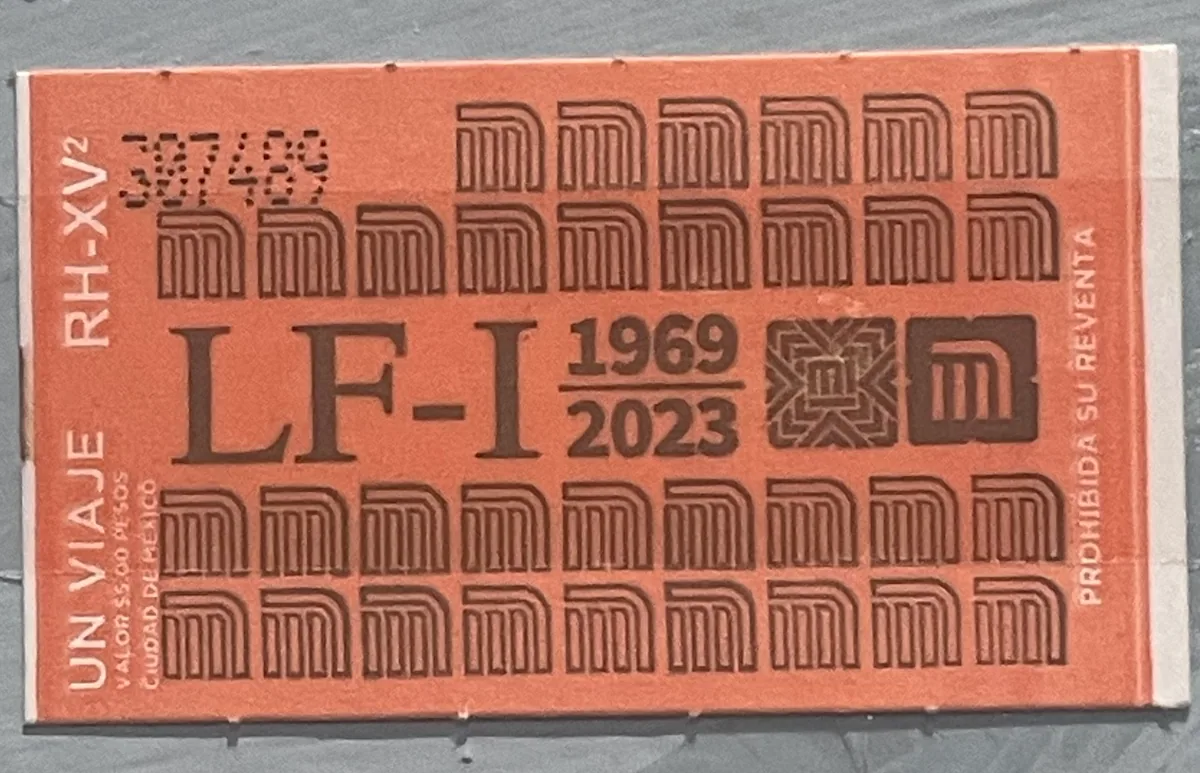
Mexico City is where a backpacker’s daily transport cost is set, and it is set absurdly low. The Metro‘s own English-language information page answers the question in four words: “The fare is 5 pesos.” One ride, anywhere on the network, for MX$5 — twelve lines, 195 stations, and 4.5 million passengers a day.
The Metrobús — the bus rapid transit network, 164 kilometres and 280 stations across seven lines — charges MX$6.00 a trip, and MX$30.00 for the service to the airport, which runs from Amajac station on Line 4 along Paseo de la Reforma.
- Six Metro rides in a day: MX$30
- Four Metrobús rides in a day: MX$24
- A mixed day of three Metro and two Metrobús rides: MX$27
- The Metrobús to the airport: MX$30
The small print is where the money is saved or lost.
Transfers inside the Metrobús are free — between Lines 1 to 7, per card and per person, provided you make them “dentro de las primeras dos horas de haber ingresado al sistema y con recorrido en una sola dirección”, inside two hours and in one direction. If your sightseeing involves crossing the city twice, that is MX$6 instead of MX$12.
The Metro takes a contactless bank card. The operator’s own page says you can “access the Metro network using a contactless debit or credit card. Simply tap your card on the validator at the turnstile.” For the Metrobús you need the Tarjeta de Movilidad Integrada, sold from machines at every station, and there is a one-off card cost.
The only official figure we could find for it comes from the city government’s own press note of 29 June 2026, about the commemorative World Cup print run: “estarán disponibles nuevamente al precio oficial de 15 pesos”. Treat MX$15 as the reference price and check the machine, because the Metro and Metrobús pages never print the card price at all.
Cash in hand is not a thing. The Metrobús FAQ states that during a contingency only “supervisores de Metrobús que estén debidamente identificados” may collect a fare, that police officers are not authorised to collect anything, and that if no Metrobús staff are at the turnstile the entry is free. If somebody in a uniform asks you for cash at a station, the answer is in the operator’s own document.
The last train is earlier than you think, and the last bus is later.
- Metro: Monday to Friday 05:00 to midnight; Saturdays 06:00 to midnight; Sundays and holidays 07:00 to midnight.
- Metrobús: Monday to Saturday 04:30 to midnight; Sundays and holidays 05:00 to midnight.
- Metrobús extended service, Fridays and Saturdays: Lines 1, 2 and 7 run until 01:00 at roughly ten-minute intervals, “manteniendo la tarifa de $6.00”.
Free travel on the Metrobús is limited to people aged 70 and over, people with disabilities, children under five, and holders of a free-travel card. There is no tourist version of that list.
Intercity buses: what a class actually buys
Mexico’s long-distance buses are the best-value transport in the country and the hardest to price from outside, because the biggest operator does not print a fare.
ADO sells four service tiers, and it names them itself in the conditions of its digital ticket office: “servicios de viaje directo de origen a destino (lujo, ejecutivo, primera y directo económico)”. What ADO publishes openly is not the fare but the allowance that comes with the class:
- Primera and Directo Económico: up to 25 kg of luggage free
- Ejecutivo: up to 35 kg free
- Lujo: up to 50 kg free
- Excess: the full sentence is worth reading, because the charge is conditional: “Si el equipaje excede el peso permitido según el servicio contratado y dependiendo de la terminal donde se preste el servicio puede ser aplicado un cargo adicional de $5.00 (cinco pesos 00/100 M.N.) por cada kilogramo extra.” It depends on the terminal, and it may be applied rather than will be. ADO adds that “las tarifas por exceso de equipaje pueden variar” and that on the México–Puebla and Puebla–México runs it does not charge for excess luggage at all.
ADO also states plainly: “No hay penalización al cancelar el boleto” — although the refund goes to a Saldo Max balance rather than to your card, promotional and advance-purchase fares are not cancellable at all, and “no procederá ningún tipo de reembolso posterior a la fecha de viaje”. Its digital ticket office “no implica cargos adicionales sobre el precio del servicio adquirido”.
ETN is the operator that does publish a number. Its Oaxaca route page states: “El boleto desde México Norte a Oaxaca tiene un costo desde $1200.00 MXN”, in Gran Lujo class.
The same company prints MX$635 for CDMX to Guadalajara and MX$405 for Morelia to Mexico City’s Central del Norte, and describes the cabin as “asientos ergonómicos reclinables tipo cama y semi-cama, pantallas individuales táctiles HD, conexiones eléctricas, sanitarios independientes para damas y caballeros, WiFi abordo”, with seat selection “sin costo adicional”. Its luggage rule is 25 kg free, then “el 1% sobre la tarifa base del costo del boleto” per extra kilo. Its online terms are stricter than ADO’s:
“En compras por INTERNET NO HAY CANCELACIONES NI DEVOLUCIONES” — changes are free, up to two per ticket.
Why the class is not just comfort. The FCDO turns the choice into a safety decision, not a luxury one: “Try to travel on first-class buses using toll roads, which have a lower rate of incidents than second and third-class buses travelling on the less secure free (‘libre’) roads. Most first-class bus companies perform security checks when passengers board the bus.”
So the honest position on fares: ETN publishes from-prices and ADO does not. ADO’s site renders its route pages as an application, and no fare reaches the page text. Anyone quoting you an exact ADO fare to the peso from a public page is either reading a booking engine at that moment or guessing.
One note on where the ADO quotations above come from, because it took us three attempts to reach them. ADO’s help centre is a separate site from its ticket shop — hola.ado.com.mx, not ado.com.mx — and it answers a browser normally while refusing automated readers. Every word above was read there, in the article titled Equipaje Documentado and the Taquilla digital terms, both live on the day of writing.
What we could not do is reach them through the help centre’s own search from a cold start, which is why the terms URLs printed on some third-party pages return nothing useful.
Beds: five cities, and a floor to argue with
Dorm prices in Mexico are the least volatile cost of the trip, and the published ones cluster tightly. These are the price cards from Hostelworld’s city pages, currency forced to pesos, read on 4 October 2026:
| City | Hostel | Dorm from | Private from (same card) |
|---|---|---|---|
| Mexico City | Viajero CDMX Centro Hostel | MX$207.90 | separate figure, not a dorm |
| Mexico City | Casa Pepe Hostal Boutique | MX$211.61 | separate figure |
| Mexico City | Barrio Downtown Mexico City | MX$320.00 | separate figure |
| Oaxaca | Hostal Central | MX$180.00 | separate figure |
| Oaxaca | Azul Cielo Hostel | MX$190.00 | separate figure |
| Oaxaca | Casa Angel Hostel | MX$198.00 | separate figure |
| San Cristóbal de las Casas | Hostal La Isla | MX$130.00 | separate figure |
| San Cristóbal | Posada del Abuelito | MX$150.00 | separate figure |
| San Cristóbal | Puerta Vieja Hostel | MX$198.00 | separate figure |
| Mérida | Hostal La Ermita Mérida | MX$168.07 | separate figure |
| Mérida | Guaya Hostel | MX$170.00 | separate figure |
| Mérida | CHE Nómadas Mérida | MX$200.00 | separate figure |
| Tulum | Luhme Tulum Hostel | MX$136.91 | separate figure |
| Tulum | Casa Frida Tulum | MX$207.00 | separate figure |
| Tulum | Mayan Monkey Tulum | MX$223.23 | separate figure |
Three caveats, because this table is the one most likely to mislead you.
First, “from” means from. These are the cheapest bed the platform displays for that property, not a quote for your night. We re-fetched Mexico City with check-in dates in October 2026, December 2026 and February 2027 and got identical figures every time, which tells you the number is a display price rather than a live rate. It is a floor, and a floor is what a budget is built on.
Second, the platform’s own floor is nonsense. The same page carries a line reading “Dorm beds in Mexico City start from around MXN23.00 per night”. MX$23 is about a dollar and a half; some city pages advertise a MX$9 bed. We are not repeating those as prices. The table above is the range that recurs across every source we read.
Third, the hostels themselves mostly do not publish rates, and the ones that do are not always where you expect them. We went looking at the properties directly, and the honest result is messier than the tidy version:
- Puerta Vieja Hostel is in San Cristóbal de las Casas, not Oaxaca, and it is live and priced — Hostelworld’s San Cristóbal page lists its dorm from MX$198.00, which is the figure in the table above. It has no site of its own that we could find, so the platform is its price list.
- Casa Arnel, in Oaxaca, does publish a rate — but on KAYAK, at MX$600 to MX$626, and that is a room, not a dorm. Its own site,
casaarnel.com.mx, answers with a Cloudflare block page rather than a price. It is also on Hostelworld, filed as Hotel Casa Arnel under the hotels tab rather than the hostels tab, which is exactly the kind of place a reader’s check will diverge from theirs. - Nómadas in Mérida — CHE Nómadas Mérida on the platform — is listed at MX$200.00 and is the one in the table above. There is a separate Nómada Hostel Oaxaca in Oaxaca, a different business entirely, still listed with no bed price shown and availability marked very low.
- Mundo Joven Catedral in Mexico City runs its own site, which sets out room types and hands you to a booking engine without ever printing a dorm rate.
So the shape of it: two of the four are priced and checkable, one is priced on a third-party site as a room rather than a bed, and two publish nothing we could read. If you want a nightly figure you can hold the property to, the platform is often a better witness than the property — which is the opposite of what you would assume, and worth knowing before you ring a doorbell.
What the hostel table cannot tell you is what a bed costs relative to the ticket you came for. Two nights in the cheapest San Cristóbal dorm — MX$260 — cost less than half of one entry to Chichén Itzá at MX$676.
Food: from MX$34 to MX$6,090, with the real rungs in between

Mexican food is the part of the budget that can be almost anything, so here is the ladder with published prices on every rung — and the rungs that nobody publishes, said out loud.
The staples, from the government’s own price service. The SNIIM, the market information system run by the economy ministry, reports prices by city and by day:
- Tortilla, per kilo: MX$21.70 in Mexico City, MX$24.50 in Oaxaca, MX$28.50 in Mérida — 2 October 2026
- White egg, per kilo: MX$35.00 retail in Mexico City, MX$42.00 retail in Mérida — 30 September 2026
- Whole chicken, per kilo: MX$62.00 for a Bachoco bird from Guanajuato, sold through the Becerra distribution centre in Mexico City — 1 September 2026
A hostel kitchen and those three lines are the cheapest way anyone eats in Mexico, and they are the only food prices in this article published by the Mexican state itself. The drink, the night and the state-by-state safety map are the other half of that budget, in eating, drinking and staying safe in Mexico.
The street. Taquería El Califa prints its own menu, and a taco de pastor is MX$34.00. Two of those is MX$68, which is the number that makes a Mexican day cheap.
The cheap cooked meal has no official price, and that is worth knowing. The comida corrida — soup, rice, a main, a drink, often a dessert — is the institution that feeds the country at midday. Local food guides covering Oaxaca price a full menú at MX$80–130, and one named place, Santo Sabor, at MX$110–130. Those are editorial pages, not the kitchens’ own menus, so treat the range as a range:
at those prices, a cooked lunch costs less than two tacos at a Mexico City chain.
The middle. Numbeo’s city pages, all last updated 2 October 2026, put an inexpensive restaurant meal at MX$200.00 in Mexico City, MX$165.00 in Oaxaca and MX$249.00 in Mérida, a fast-food combo at MX$199.00, MX$175.00 and MX$150.00, and a three-course meal for two at MX$900, MX$600 and MX$1,000. The Mexico City page carries 1,333 entries from 138 contributors; Mérida’s carries 312 entries from 29; Oaxaca’s warns that “some data are estimated due to a low number of contributors”.
A named middle rung, from the restaurant’s own site: Contramar in Mexico City prints “Pescado a la talla 500 g… $810.00” and a 60 ml pour of Mezcal Sabe Tierra at MX$205.00. That plate alone is four nights at Puerta Vieja in San Cristóbal (MX$198) or six at Hostal La Isla (MX$130).
The ceiling is higher than most people guess. Quintonil, in Mexico City, publishes its own menu: “Menú $6,090 MXN”, with pairings listed separately at MX$3,140 for Mexican wines, MX$8,450 for the Terroir & Rarezas flight, and MX$2,175 without alcohol. Two menus with the most expensive flight is MX$20,630 — more than 150 nights in the cheapest bed in this guide.
Tipping: the law is on your side, the custom is not. PROFECO, the federal consumer agency, states it in one sentence: “Respecto a la propina, la Profeco subraya que no se puede exigir, ésta es voluntaria y no puede incluirse en la cuenta sin el consentimiento del comensal.” Tips cannot be demanded, and a restaurant cannot put one on the bill without your agreement.
The agency returns to the point in its own press notes — “ningún proveedor o prestador de servicio puede exigir o establecer un monto de la misma” (10 May 2026) and, more recently, “ningún establecimiento puede incluirla de forma automática en la cuenta” (15 September 2026). The Ley Federal del Trabajo, in the text last reformed on 14 May 2026, adds why they matter so much to the people serving you:
“Las propinas son parte del salario de los trabajadores… Los patrones no podrán reservarse ni tener participación alguna en ellas.” No official Mexican source prints a customary percentage — the 10 to 15% you will read elsewhere is convention, not law. Tip in cash, and know that if a card machine arrives with a tip already added, PROFECO’s sentence is the one to quote.
Water and ice. The FCDO health advice is one line: “Only drink boiled or bottled water and avoid ice in drinks.” The CDC explains the ice: “Do not use ice in destinations with limited access to clean water… because it was likely made with tap water.” Bottled water is cheap, and a 20-litre garrafón is the cheapest unit of all — though this is a figure we could not verify:
the only published refill prices we found were a 2023 newspaper survey at MX$44.50 to MX$53, three years stale, and no 2026 price list from a purifier or retailer that we could open.
Fiestas: the days that are free, and the nights that are not
Mexico’s biggest events are public events, and the official pages that announce them publish no ticket price, which is the clearest signal there is that there is nothing to buy. The pattern is worth learning, because it decides whether your trip collides with a cheap party or an expensive queue.
Día de Muertos runs across three nights, and the city’s own tourism office explains what each one is for:
- 31 October — “se recibe a las almas infantiles en ‘El Susurro de los Angelitos'”, the souls of children.
- 1 November — “ocurre ‘El gran reencuentro’ con los adultos”, the adult dead.
- 2 November — the night closes with “La Alumbrada”.
The Gran Desfile de Día de Muertos goes down Paseo de la Reforma to the Zócalo, and the capital’s culture secretariat dates this year’s edition: “esta edición del Gran Desfile de Día de Muertos se llevará a cabo el sábado 31 de octubre de 2026”, at 14:00. The Ofrenda Monumental in the Zócalo runs “del 29 de octubre al 2 de noviembre” and comes “acompañado de una sólida cartelera de conciertos gratuitos”.
The cempasúchil flower festival fills Reforma from 18 October to 1 November. None of the three publishes a price. Budget the bed, not the ticket — and if you are in Mexico City for those dates, book the bed in advance, because that is what the money goes on.
El Grito is the other free one. The Presidency’s own account of the 216th anniversary, published 15 September 2026, describes the Zócalo lighting up “con juegos pirotécnicos tricolores” after musical performances on the same stage. No price is published because there is no ticket: you stand in the square.
Semana Santa is the one to plan around rather than attend. The SEP’s official school calendar places the second school recess “del 22 de marzo al 3 de abril de 2027”, which is when Mexican families travel and when coastal buses and beds fill first.
Two things you do pay for, and one of them has published prices.
The Ballet Folklórico de México at the Palacio de Bellas Artes sells through INBAL, and its own page prints three tiers: MX$1,600 luneta, MX$1,350 anfiteatro, MX$350 galería. That is the ceiling of a cultural night out in the capital, and the MX$350 gallery seat is the honest backpacker option in the same room as the MX$1,600 one.
Lucha libre at Arena México is the opposite case. CMLL’s own site gives the show times — “Funciones: Viernes 8:30 p.m. Domingos 5:00 p.m. Martes 7:30 p.m.” — and publishes no price at all; its official ticket seller would not let us read an event page. Buy on the night or accept that the tier you read about elsewhere is not a figure we can confirm.
Drinking is priced by the same page the rest of this guide uses. Numbeo’s Mexico City page, last updated 2 October 2026, puts a domestic draught of 0.5 litres at MX$60.00 and an imported 0.33-litre bottle at MX$100.00; Mérida is cheaper on both lines, at MX$54.48 and MX$68.82. There is no cocktail row on either page and no venue we found publishes a cover charge, so treat those as the two numbers you can check.
Getting home is the cheapest part of the night. The Metro’s last trains leave at midnight, and the Metrobús runs to midnight as well, with Lines 1, 2 and 7 continuing to 01:00 on Fridays and Saturdays at the same MX$6.00. Below those networks, the city’s RTP buses are cheaper still — the CDMX government’s own information sheet of 17 July 2025 lists *”las tarifas más económicas del país:
Ordinario 2 pesos, Expreso 4 pesos, Ecobús 5 pesos y Nochebús 7 pesos”*. A MX$7 Nochebús home beats any taxi argument you will have at two in the morning.
Safety: what the official advice actually says
Mexico is the country where travel advice earns its keep, and the honest version has two halves. The headline is real. The FCDO opens its Mexico page with a warning that it “advises against all but essential travel to parts of Mexico”, and the risk it describes is not a tourist-phobia invention:
“Drug-related violence in Mexico has increased over recent years”, and in some areas “there is a risk of being caught in the crossfire or of being mistaken for a gang member”.
The second half is that almost all of it is somewhere else. The FCDO’s own framing is that “While risks are lower in tourist areas”, you should still “take advice from local authorities or your hotel”, “be aware of your surroundings at all times”, “use reputable tourism or transport companies” and “travel during the daytime where possible”. That is advice for a backpacker, not a warning off the country.
Where the risk actually lands on a backpacker is street crime and the people who engineer it:
- ATMs. “Criminals have targeted people using these services. It’s generally safer to use ATMs during daylight hours inside shops or malls. Avoid withdrawing large amounts and watch who is around you while you are at an ATM.”
- Public transport and stations. “Be alert on public transport, at airports and in bus stations. Theft on buses is common, so keep your belongings safe.”
- Bags. “Pickpocketing and theft are common, including on public transport.” The FCDO’s own list of precautions includes watching “your luggage, even in apparently secure places like the lobby of your hotel”.
Three specific scams, in the FCDO’s words.
The police impersonation one is the most common and the one with the clearest script: “Be wary of criminals posing as police officers and trying to fine or arrest you for no reason”, and, about genuine officers, “Some genuine police officers have extorted money from tourists for alleged minor offences or traffic violations.” The official instructions are precise:
“do not hand over money or your passport”, “ask for a copy of the fine, which is payable later”, “ask for ID”, and note the officer’s name, badge number and patrol car number.
The taxi one has a solution: “Use the better regulated ‘sitio’ taxis from authorised taxi ranks or ask your hotel to order you a taxi. At airports, only use authorised pre-paid airport taxi services.” In Cancún, licensed drivers protesting against Uber “have pulled tourists from Uber taxis”.
The drink one is not a joke in Mexico: “Do not leave food and drinks unattended in bars and restaurants. Criminals have robbed or assaulted travellers after drugging them.” The FCDO also carries a separate methanol warning: “There have been deaths and cases of serious illness caused by alcoholic drinks containing methanol in Mexico… Even small amounts of methanol can kill.”
Kidnapping, in proportion. The FCDO says “tourists are not usually targeted”, then describes the version that does touch travellers: “Short-term opportunistic kidnapping (called ‘express kidnapping’) can happen, particularly in urban areas. Kidnappers force victims to withdraw money at an ATM to secure their release.” The practical defence is the same as the ATM advice: daylight, small amounts, no displays of cash.
Carry the document, not a photograph of it. This is the rule that catches people out: “The Mexican authorities can ask to see your passport and entry stamp to prove your entrance and stay. They do not accept copies or photos.” If you cannot produce it, “immigration officers may question and detain you while they check your immigration status”.
The FCDO points to the INM’s own digital registry of entry documents as the backstop, and confirms that entry stamps and residency cards are what officers ask for.
Laws that cost money. Vaping is the cleanest example: it is illegal to bring e-cigarettes or vaping devices into Mexico or to buy and sell them — “Customs officials will confiscate these items; and they could fine or detain you” — and smoking or vaping in a public place carries “a fine of up to 3,000 Mexican pesos (about £150)”. Drug offences “carry sentences of up to 25 years”.
Demonstrations are a real planning factor, not a footnote. The FCDO notes that “Political demonstrations are common in Mexico City and can happen across the country”, that there have been “ongoing protests blocking vehicle access to Oaxaca airport” — with the advice to check your flight and allow more time — and that it is “illegal for foreign nationals to participate in political activities in Mexico”.
Two natural hazards worth a line. The hurricane season “normally runs from June to November” and affects both coasts; earthquakes are a risk “in most parts of Mexico”, particularly in Oaxaca and Guerrero; and Popocatépetl has a 12-kilometre exclusion zone around it, which puts a volcano hike off the table.
What the advice does not settle. The FCDO’s own framing is honest about the limit of official advice: it tells you which states to avoid and which habits to keep, and it does not tell you what your trip will cost or where the cheap bed is. That gap is what the rest of this guide is for. Read the FCDO before you book, and read the ticket window before you assume the headline price is the price.
The two documents are not in competition; they answer different questions.
Sources cited
Every figure in this article comes from one of the pages below. Each entry names the source, what it was used for, and the real address. Where a page could not be found, could not be read, or no longer says what it said when we read it, that is stated here rather than left out. All pages were read on 4 October 2026 unless a different date is given.
- **GOV.UK / FCDO, *Mexico travel advice*** — the “advises against all but essential travel to parts of Mexico” warning, the list of states under advisory, and the entry-requirements framing — https://www.gov.uk/foreign-travel-advice/mexico
- **GOV.UK / FCDO, *Mexico travel advice: Safety and security*** — the source of nearly every quoted passage in the safety section: the ATM advice, the pickpocketing and luggage lines, the police-impersonation script and the four official instructions, the “sitio” taxi advice and the Cancún Uber protests, the drink-spiking and methanol warnings, the express-kidnapping passage, the passport-and-entry-stamp rule, the vaping fine of “up to 3,000 Mexican pesos”, the 25-year drug sentence, the demonstrations and Oaxaca airport protests, the hurricane season, the Oaxaca and Guerrero earthquake risk, and the 12-kilometre Popocatépetl exclusion zone — https://www.gov.uk/foreign-travel-advice/mexico/safety-and-security
- **GOV.UK / FCDO, *Mexico travel advice: Regional risks*** — which regions are under advisory and the Federal Highway 199 restriction between San Cristóbal de las Casas and Palenque — https://www.gov.uk/foreign-travel-advice/mexico/regional-risks
- **GOV.UK / FCDO, *Mexico travel advice: Health*** — the water line, quoted verbatim as “Only drink boiled or bottled water and avoid ice in drinks.” — https://www.gov.uk/foreign-travel-advice/mexico/health
- **Cámara de Diputados, Ley Federal de Derechos, Article 288** — the four price categories (Categoría I MX$209.09, II MX$156.75, III MX$143.69, IV MX$104.50), the after-hours MX$731.84, the Categoría IV site list (Chichén Itzá, Uxmal, Dzibilchaltún), the MX$5 rounding rule with its round-down tie-break, the Sunday exemption limited to “los visitantes nacionales y extranjeros residentes en México”, the reduction percentages (50% Categoría I; 45% II and III), the phrase “acrediten su nacionalidad y residencia”, and “no será aplicable … en las visitas después del horario normal de operación”. The article cites the reform published in the Diario Oficial on 7 November 2025; the article-by-article text carries that reform date on Categorías I–IV, on the after-hours paragraph and on the reduction paragraph. Read in the consolidated text at https://mley.mx/LFD/articulo/288/ — the Cámara de Diputados landing page is https://www.diputados.gob.mx/LeyesBiblio/ref/lfd.htm and the consolidated PDF is https://www.diputados.gob.mx/LeyesBiblio/pdf/LFD.pdf
- **Cámara de Diputados, Ley Federal de Derechos, Article 6** — the centavos rounding rule (1 to 50 down, 51 to 99 up) — https://mley.mx/LFD/articulo/6o/
- **Cámara de Diputados, Ley Federal de Derechos, Article 288-D** — the professional filming and photography fee, read verbatim in the consolidated text: “Por día $15,915.57” for “Filmaciones o videograbaciones”, and “Por día en zona arqueológica, museo, o monumento del patrimonio nacional bajo custodia de los institutos competentes $7,957.68” for still photography, with public institutions devoted to the promotion, teaching or research of culture, science or art paying “el 40%” and “el 60%” respectively. Those are the statutory figures behind the article’s MX$15,916, MX$7,958, 40% and 60% — https://mley.mx/LFD/articulo/288-d/ — the article also records that these fees sit on top of the Ley Federal de Derechos, which the INAH communiqué in entry 11 confirms.
- **Cámara de Diputados, Ley Federal de Derechos, Article 8-I** — the “Visitante sin permiso para realizar actividades remuneradas” fee of $983.00, reformed in the Diario Oficial on 7 November 2025 — https://mley.mx/LFD/articulo/8o/ — see the note on this figure in the working notes: the amount is confirmed in the law, but INM’s own 2026 tariff table could not be read, so the article attributes it to the law.
- **INAH, Lugares — the individual site pages** — the pages the article reads for the “Otras cuotas” block, the opening hours and last access, the “Domingos gratis (mexicanos)” line, and the warning that “Adicionalmente a la cuota de admisión se debe cubrir una cuota extraordinaria del Gobierno del Estado de Yucatán.” The Chichén Itzá page is https://lugares.inah.gob.mx/es/node/4335 — **and it is the source of one of the errors this article has now corrected: it still prints the state charge as “(CULTUR) Parador turístico extranjeros $548 y nacionales $190”, a figure CULTUR has since raised. The federal fees on these pages are current; the state fee is not.** The main portal is https://www.inah.gob.mx/zonas-arqueologicas
- CULTUR Yucatán (Patronato de las Unidades de Servicios Culturales y Turísticos del Estado de Yucatán) — the state trust that actually collects the second window at Chichén Itzá, Uxmal and Ek Balám. Its own destination pages, read 11 October 2026, publish the bundled single-ticket prices: Chichén Itzá: extranjeros $697, nacionales $310, residente extranjeros $105; Uxmal: extranjeros $604, nacionales $275, residente yucateco $105; Ek Balám: extranjeros $709, nacionales $242. These are the whole price at one window, which is why the table above itemises instead — its MX$481 and MX$571 columns are the state’s share once the federal MX$105 is set aside, as the January 2026 press reported them — https://www.culturyucatan.com/destinos/chichen-itza · https://www.culturyucatan.com/destinos/uxmal · https://www.culturyucatan.com/destinos/ek-balam — we could not establish when CULTUR moved from publishing an itemised state fee to publishing a bundled total, so the article prints both and says which is which.
- Yucatán press coverage of the 2026 state tariffs — the breakdown the article’s table uses: MX$105 to INAH plus MX$571 to the state for a foreign adult, a total of MX$676, against MX$303 for a Mexican (105 + 198) and MX$105 for a Yucatecan. El Heraldo de México, 15 January 2026, prints the components in words and confirms the state trust’s own figure: “la tarifa del INAH, que es de 105 pesos para mexicanos y extranjeros; y la del Patronato Cultural estatal, que es de 198 pesos para nacionales y de 571 pesos para quienes vienen de otros países” — https://heraldodemexico.com.mx/nacional/2026/1/15/se-alistan-para-cobrar-tarifa-unica-de-acceso-chichen-itza-759583.html — PorEsto, 2 January 2026, gives the same 105 + 571 = 676 — https://www.poresto.com/yucatan/merida/2026/1/2/cuanto-cuesta-la-entrada-a-chichen-itza-para-mexicanos-yucatecos-y-extranjeros-en-2026.html — Yucatán Magazine, 2 January 2026, publishes the full Yucatán table including the MX$691 top figure, which belongs to Ek Balám, not Chichén Itzá — https://www.yucatan.com.mx/merida/2026/01/02/tarifas-en-zonas-arqueologicas-de-yucatan-en-2026-hasta-691-por-persona.html — and Quadratín Yucatán, 16 January 2026, carries the state tourism secretary’s confirmation that the cobro único is “la suma de lo que es actualmente” and explicitly not an increase — https://yucatan.quadratin.com.mx/principal/confirman-cobro-unico-de-acceso-a-chichen-itza-no-representa-incremento/ — we could not open the Diario Oficial Decreto 144/2025 that Yucatán Magazine cites as the exemption’s legal basis, so the exemption is reported rather than read.
- **Heraldo de México Yucatán, 24 March 2026, Nueva forma de entrar a Chichén Itzá: así funcionará el Boleto Único desde marzo 2026 — the single-ticket system that replaced the two windows at Chichén Itzá from 27 March 2026**, sold through the CATVI visitor centre, and the confirmation that the federal base “no incluye los cobros adicionales aplicados por terceros, como los impuestos del Gobierno estatal o tarifas de otras agrupaciones comunitarias” — https://yucatan.heraldodemexico.com.mx/tendencias/2026/3/24/nueva-forma-de-entrar-chichen-itza-asi-funcionara-el-boleto-unico-desde-marzo-2026-4689.html — this is the system the article describes as two windows; it was accurate for the January tariff and had been merged by the time of writing. The article says so in the body.
- **Secretaría de Cultura / INAH, press note of 12 September 2025, *Ajustes en tarifas en museos y zonas arqueológicas*** — the 2026 update of foreign-visitor fees, the confirmation that Mexican and resident fees are unchanged, the list of exemptions and the free Sunday for Mexicans and foreign residents with proof — https://www.gob.mx/cultura/prensa/nota-informativa-ajustes-en-tarifas-en-museos-y-zonas-arqueologicas?idiom=es
- **Secretaría de Cultura / INAH, communiqué of 17 June 2024, *Falso que el INAH prohíba el uso de dispositivos móviles en zonas arqueológicas y museos*** — the article’s bulletin 345. Source of “está prohibido el acceso del público con dispositivos de uso personal, como celulares, tabletas electrónicas y cámaras fotográficas no profesionales”, “no existe prohibición para que las personas puedan tomar imágenes para uso personal”, the commercial-use fee of $60.00 (sesenta pesos) and the statement that these charges are additional to those set in the Ley Federal de Derechos — https://www.gob.mx/cultura/prensa/falso-que-el-inah-prohiba-el-uso-de-dispositivos-moviles-en-zonas-arqueologicas-y-museos — the bulletin PDF is https://www.inah.gob.mx/images/boletines/2024/345/Boletin%20345.pdf
- **INAH, communiqué of 18 August 2025, *Todos los domingos, el acceso para mexicanas y mexicanos a las zonas arqueológicas del país es gratuito*** — the qualifier that decides whether the free Sunday applies to you, quoted verbatim as “siempre y cuando sean mexicanos o extranjeros residentes en México”, and the confirmation that free Sunday applies at Tulum and the country’s other 193 open archaeological sites — https://www.inah.gob.mx/prensa/comunicados/todos-los-domingos-el-acceso-para-mexicanas-y-mexicanos-a-las-zonas-arqueologicas-del-pais-es-gratuito
- **INM, *Países y regiones que no requieren visa para viajar a México*** — the visa-exemption list for Australia, Canada, the United States and the United Kingdom, quoted as “Las personas nacionales de los siguientes países o regiones, no requieren visa para viajar a México ni para solicitar su internación como visitante sin permiso para realizar actividades remuneradas (turismo)” — https://www.inm.gob.mx/gobmx/word/index.php/paises-no-requieren-visa-para-mexico/ — see the note in the working notes: the country list itself is published as an image on that page, so the four countries are named by the article on the strength of the annex image and of the wider INM documentation, not of readable page text.
- **INM, *Forma Migratoria Múltiple Digital (FMMd)***, published 2 May 2023 — the end of the paper form for arrivals by air, quoted as “omitir la expedición de la Forma Migratoria Múltiple de manera física para aquellos extranjeros que ingresen a México vía aérea”, and the sentence “colocarán la fecha estimada de salida del país, de acuerdo a la temporalidad otorgada” — https://www.gob.mx/inm/articulos/forma-migratoria-multiple-digital-fmmd?idiom=es
- **INM, *Tarifas de derechos migratorios por internación vía aérea, terrestre, marítima y frontera sur 2026***, published 31 December 2025 — the electronic-payment rule, quoted as “todos los pagos son electrónicos o bancarios, nunca en efectivo ante el personal del INM” — https://www.gob.mx/inm/es/articulos/tarifas-de-derechos-migratorios-por-internacion-via-aerea-terrestre-maritima-y-frontera-sur-2026
- **Cámara de Diputados, Ley de Migración, Article 52-I** — the permitted stay, which the statute writes out in words: “un tiempo ininterrumpido no mayor a ciento ochenta días”. The article now quotes it as the statute spells it and gives 180 days as the plain reading — https://mley.mx/LMigra/articulo/52/ — consolidated text landing page https://www.diputados.gob.mx/LeyesBiblio/ref/lmigra.htm
- **Cámara de Diputados, Ley de Migración, Article 145** — the overstay fine, now quoted in full as the statute writes it: “una multa de veinte a cuarenta días de salario mínimo general vigente en el Distrito Federal”, followed by the article’s second paragraph, “Los extranjeros que se encuentren en los supuestos de las fracciones III, IV y V del artículo 133 de esta Ley no serán acreedores a ninguna multa.” The statute still says Distrito Federal — the Ley de Migración has been reformed repeatedly, most recently in the Diario Oficial of 15 January 2026, and this article has never been updated to say Ciudad de México — https://mley.mx/LMigra/articulo/145/ — the official reform history is at https://www.diputados.gob.mx/LeyesBiblio/ref/lmigra.htm — we read this in the mLey consolidated text, which states the Cámara de Diputados PDF as its source; the official PDF itself would not yield text to us.
- **Government of Canada, *Travel advice and advisories for Mexico*** — the two quoted lines, “The maximum stay for tourism purposes is 180 days. This maximum is not granted automatically.” and “You don’t have to pay this fee if you’re entering by land for tourism purposes and your stay will not exceed 7 days.” — page last updated 10 October 2026 — https://travel.gc.ca/destinations/mexico
- Visitax / Servicio de Administración Tributaria de Quintana Roo — the state visitor tax. The official portal states “This tax is mandatory and must be paid by all foreign tourists” and cites Article 51 octies of the State of Quintana Roo Law of Rights; it publishes no peso amount — https://www.visitax.gob.mx/sitio/ — the state’s Law of Rights, in the version published 18 December 2025, is recorded in the state congress’s law index at https://www.congresoqroo.gob.mx/leyes/195/ — the article’s figure of 2.50 UMA, and the exemption for foreign visitors entering by the southern border, could not be read in the law’s own text, which is served only as PDFs we were unable to open. Both are corroborated by state press coverage of December 2025 rather than by the statute itself, and should be described as reported, not as read.
- **INEGI, Unidad de Medida y Actualización (UMA) — the daily value of MX$117.31 applicable from 1 February 2026, published in the Diario Oficial on 9 January 2026. We could not read this on INEGI’s own pages: the UMA topic page returns a JavaScript shell with no figures, the press release hangs, and INEGI’s own bulletin is served as a PDF we could not open. The figure is confirmed instead through two independent tax advisories that quote that bulletin, and through the Diario Oficial note of 9 January 2026** — https://www.inegi.org.mx/temas/uma/ · https://www.dof.gob.mx/nota_detalle.php?codigo=5778072&fecha=09/01/2026 · https://russellbedford.mx/en/fiscal/inegi-publica-actualizacion-del-valor-de-la-uma-para-2026/
- **Metro de la Ciudad de México, *Welcome to the Mexico City Metro System*** — the English-language operator page, source of “The fare is 5 pesos.”, of “access the Metro network using a contactless debit or credit card. Simply tap your card on the validator at the turnstile.”, and of the operating hours (Monday to Friday 05:00 to midnight; Saturdays 06:00; Sundays and holidays 07:00) — https://www.metro.cdmx.gob.mx/mas-informacion/welcome-mexico-city-metro-system — the contactless-card announcement, published 27 September 2024, is https://www.metro.cdmx.gob.mx/comunicacion/nota/el-metro-da-la-bienvenida-las-tarjetas-bancarias-sin-contacto-como-medio-de-pago-del-servicio
- **Metrobús (CDMX), *PagoMB*** — the MX$6.00 fare, quoted as “La tarifa de un viaje en el Sistema Metrobús es de $6.00 pesos M.N.”, and the free-transfer rule — https://www.metrobus.cdmx.gob.mx/dependencia/PagoMB
- **Metrobús (CDMX), *Ruta Aeropuerto*** — the MX$30.00 airport service from Amajac station on Line 4, quoted as “La tarifa de un viaje en Metrobús al Aeropuerto de la Ciudad de México (Terminales 1 y 2) es de $30.00 pesos m.n.” — https://www.metrobus.cdmx.gob.mx/ruta-aeropuerto
- **Metrobús (CDMX), *Preguntas frecuentes*** — the transfer window quoted as “dentro de las primeras dos horas de haber ingresado al sistema y con recorrido en una sola dirección”, and the cash-collection rule quoted as “supervisores de Metrobús que estén debidamente identificados”, including the statement that if no Metrobús staff are at the turnstile entry is free — https://www.metrobus.cdmx.gob.mx/portal-ciudadano/preguntas-frecuentes
- **Metrobús (CDMX), *Horario extendido*** — the Friday and Saturday extension to 01:00 on Lines 1, 2 and 7, with the fare held at MX$6 — https://www.metrobus.cdmx.gob.mx/portal-ciudadano/horario-extendido
- **Metrobús (CDMX), *Transbordo*** — the two-hour, one-direction validity of the free transfer — https://www.metrobus.cdmx.gob.mx/dependencia/PagoMB/transbordo
- Jefatura de Gobierno de la Ciudad de México, press note of 29 June 2026 — the MX$15 official price of the Tarjeta de Movilidad Integrada, quoted as “estarán disponibles nuevamente al precio oficial de 15 pesos”, in a note about the World Cup commemorative print run — https://jefaturadegobierno.cdmx.gob.mx/comunicacion/nota/anuncia-clara-brugada-nuevo-tiraje-de-500-mil-tarjetas-de-movilidad-integrada-conmemorativas-del-mundial-llama-no-comprar-en-la-reventa
- Jefatura de Gobierno de la Ciudad de México, information sheet of 17 July 2025, RTP — the RTP fares quoted as “las tarifas más económicas del país: Ordinario 2 pesos, Expreso 4 pesos, Ecobús 5 pesos y Nochebús 7 pesos” — https://jefaturadegobierno.cdmx.gob.mx/comunicacion/nota/170725-tarjeta-informativa-rtp
- ADO (Autobuses de Oriente), help centre — the four service tiers (“servicios de viaje directo de origen a destino (lujo, ejecutivo, primera y directo económico)”, in the Taquilla digital terms), the luggage allowances by class (“Servicio Primera y Directo Económico: hasta 25 kg sin costo”, “Servicio Ejecutivo: hasta 35 kg sin costo”, “Servicio de Lujo: hasta 50 kg sin costo”), the conditional excess charge quoted in full (“Si el equipaje excede el peso permitido según el servicio contratado y dependiendo de la terminal donde se preste el servicio puede ser aplicado un cargo adicional de $5.00 (cinco pesos 00/100 M.N.) por cada kilogramo extra”), the line “No hay penalización al cancelar el boleto”, the rule that “no procederá ningún tipo de reembolso posterior a la fecha de viaje”, and the digital ticket office statement “Su uso es gratuito y no implica cargos adicionales sobre el precio del servicio adquirido” — https://hola.ado.com.mx/hc/es/articles/360038945792-Equipaje-Documentado · https://hola.ado.com.mx/hc/es/articles/360060895312-Cancelaci%C3%B3n-de-boletos · https://hola.ado.com.mx/hc/es/articles/53337563194651-Taquilla-digital — these pages answer a browser and refuse automated readers, so a direct visit may show a Cloudflare challenge instead of the text; every word above was read there on 11 October 2026. ADO’s public ticket pages are https://www.ado.com.mx/. The article no longer ties the four service tiers to the brands ADO Platino, ADO GL and ADO, because ADO never asserts that mapping in one place.
- ETN (Enlaces Terrestres Nacionales) — the Oaxaca fare in Gran Lujo, quoted as “El boleto desde México Norte a Oaxaca tiene un costo desde $1200.00 MXN”, the cabin description, seat selection “sin costo adicional”, the 25 kg luggage allowance, the extra-kilo rule “el 1% sobre la tarifa base del costo del boleto”, and “En compras por INTERNET NO HAY CANCELACIONES NI DEVOLUCIONES” — https://etn.com.mx/boletos-autobus/oaxaca.html · https://etn.com.mx/boletos-autobus/ · https://etn.com.mx/nosotros/terminos-condiciones.html — the CDMX–Guadalajara fare of MX$635 is at https://etn.com.mx/rutas/cdmx-a-guadalajara.php — the Morelia–Mexico City fare of MX$405 could not be re-found: the route URL now serves the site’s homepage, so that figure is unconfirmed (see the working notes).
- **Numbeo, Cost of Living in Mexico City — read on 4 October 2026 at 1,333 entries from 138 contributors: an inexpensive restaurant meal MX$200.00, a fast-food combo MX$199.00, a three-course meal for two MX$900, a domestic draught of 0.5 litres MX$60.00 and an imported 0.33-litre bottle MX$100.00 — https://www.numbeo.com/cost-of-living/in/Mexico-City — re-checked 11 October 2026: the page then read 1,334 entries from 139 contributors, last updated 8 October 2026, with the same money figures. Numbeo updates continuously; the article reproduces the read of 4 October 2026.**
- **Numbeo, *Cost of Living in Oaxaca*** — read on 4 October 2026: an inexpensive restaurant meal MX$165.00, a fast-food combo MX$175.00, a three-course meal for two MX$600. The page carries the warning “some data are estimated due to a low number of contributors” — https://www.numbeo.com/cost-of-living/in/Oaxaca-Mexico — note the city slug: the plain form
/in/Oaxacadoes not resolve and only the-Mexicosuffix loads. - **Numbeo, Cost of Living in Merida — read on 4 October 2026 at 312 entries from 29 contributors: an inexpensive restaurant meal MX$249.00, a fast-food combo MX$150.00, a three-course meal for two MX$1,000, a draught beer MX$54.48 and an imported bottle MX$68.82 — https://www.numbeo.com/cost-of-living/in/Merida — re-checked 11 October 2026: the page then read 313 entries from 30 contributors, last updated 7 October 2026, and the two beer rows had moved to MX$55.00 and MX$69.33. The figures in the article are the 4 October read.**
- Hostelworld city pages — the dorm “from” prices in the bed table, currency forced to Mexican pesos, read on 4 October 2026: Mexico City, Oaxaca, San Cristóbal de las Casas, Mérida and Tulum. The same page carries the line “Dorm beds in Mexico City start from around MXN23.00 per night”, which the article quotes and then declines to repeat as a price — https://www.hostelworld.com/hostels/north-america/mexico/mexico-city/ · https://www.hostelworld.com/hostels/north-america/mexico/oaxaca/ · https://www.hostelworld.com/hostels/north-america/mexico/san-cristobal-de-las-casas/ · https://www.hostelworld.com/hostels/north-america/mexico/merida/ · https://www.hostelworld.com/hostels/north-america/mexico/tulum/ — these “from” prices are display prices and move; the article says so in the body. On re-reading, Mayan Monkey Tulum had moved to MX$223.82 from the MX$223.23 printed here, and several of the fifteen properties are no longer visible on a city page, only inside the individual property listings.
- **SNIIM, Precios de tortilla en tortillerías por ciudad — the three tortilla prices per kilo: MX$21.70 Mexico City, MX$24.50 Oaxaca, MX$28.50 Mérida, all dated 2 October 2026 — http://www.economia-sniim.gob.mx/TortillaMesPorDia.asp — the SNIIM domain that works is economia-sniim.gob.mx;
sniim.gob.mxdoes not resolve.** - SNIIM, egg and poultry price services — the whole chicken figure now in the article, and the corrected reading of what SNIIM publishes. Read at source on 11 October 2026: SNIIM’s poultry table is headed “Precios de Pollo entero” and its columns are, verbatim, “Fecha | Producto | Marca | Origen | Peso en pie (kg) | Peso en canal (kg) | Precio ($/kg)”, grouped by distribution centre. SNIIM does publish a brand column, so the article’s Bachoco is a source datum after all — which is the opposite of what an earlier draft of this note claimed. The record the article now prints, from the D.F. Centro de distribución Becerra, is “01/09/2026 | Pollo entero | Bachoco | Guanajuato | 3.5 | 2.65 | $62.00”. The MX$59.00 printed in the first draft matched no record we could find and has been corrected. Prices are wholesale, per kilo, and differ by centre and by day: on the same page Pilgrim’s is $61.70, Tyson $61.90 and “Otros” $61.50. The white egg figures (MX$35.00 Mexico City menudeo at the Central de Abasto de Iztapalapa, MX$42.00 Mérida) come from the egg table headed “Precio de Huevo”, whose columns are “Fecha | Producto | Presentación | Precio frecuente ($/kg) | Precio mínimo ($/kg) | Precio máximo ($/kg)” — no brand column there, and the egg service updates weekly rather than daily — http://www.economia-sniim.gob.mx/SNIIM-Pecuarios-Nacionales/e_SelHue.asp · http://www.economia-sniim.gob.mx/SNIIM-Pecuarios-Nacionales/e_SelEnt.asp · result tables at http://www.economia-sniim.gob.mx/SNIIM-Pecuarios-Nacionales/e_Ent.asp · http://www.economia-sniim.gob.mx/SNIIM-Pecuarios-Nacionales/e_Hue.asp — these pages are served in a legacy single-byte encoding, so accented characters arrive broken in some readers; that is an encoding artefact, not the source’s spelling.
- Taquería El Califa, menu — the taco de pastor at MX$34.00 — https://www.elcalifa.com.mx/
- Contramar, menu and drinks list — “Pescado a la talla 500 g… $810.00” and a 60 ml pour of Mezcal Sabe Tierra at MX$205.00 — https://www.contramar.com.mx/ · https://www.contramar.com.mx/bebidascontramar.html
- Quintonil, menu, October 2026 — “Menú $6,090 MXN”, the Mexican-wine pairing at MX$3,140, the Terroir & Rarezas pairing at MX$8,450 and the alcohol-free pairing at MX$2,175 — https://quintonil.com/ — **the page also lists a fifth pairing, Maridaje de Horizontes Líquidos at MX$3,380, which the article does not use.**
- PROFECO (Procuraduría Federal del Consumidor) — that a tip cannot be demanded and cannot be added to the bill without the diner’s agreement. The article’s quoted sentence is verbatim PROFECO text, published under the title “La propina es voluntaria y no puede incluirse en la cuenta sin consentimiento de las personas consumidoras” and dated 20 May 2026: “Respecto a la propina, la Profeco subraya que no se puede exigir, ésta es voluntaria y no puede incluirse en la cuenta sin el consentimiento del comensal.” Note the page is on PROFECO’s World Cup subsite rather than the main portal, and the accent in ésta is the agency’s — https://mundialsocial.profeco.gob.mx/blog/propina-voluntaria/ — the agency’s main-portal press notes of 10 May 2026 and 15 September 2026 say the same thing in different words: “ningún proveedor o prestador de servicio puede exigir o establecer un monto de la misma” and “ningún establecimiento puede incluirla de forma automática en la cuenta” — https://www.gob.mx/profeco/prensa/la-profeco-recuerda-a-las-y-los-consumidores-que-la-propina-es-voluntaria?state=published · https://www.gob.mx/profeco/prensa/festejos-patrios-profeco-recuerda-que-la-propina-es-voluntaria-y-el-consumo-minimo-esta-prohibido?idiom=es
- **Cámara de Diputados, Ley Federal del Trabajo — that tips form part of the worker’s wage and that employers may not retain any part of them. The consolidated text carries its last reform as 14 May 2026**; note that this reform concerns performers’ rights rather than tips, and the article’s quoted sentence is the classic wording of Article 346, read in the consolidated text — https://www.diputados.gob.mx/LeyesBiblio/ref/lft.htm
- **Secretaría de Turismo de la Ciudad de México, *Día de Muertos en la Ciudad de México*** — the three nights of the celebration, quoted as “se recibe a las almas infantiles en ‘El Susurro de los Angelitos'”, “ocurre ‘El gran reencuentro’ con los adultos” and “La Alumbrada”; the Ofrenda Monumental, quoted as “del 29 de octubre al 2 de noviembre” and “acompañado de una sólida cartelera de conciertos gratuitos”; the 14:00 start of the desfile; and the cempasúchil festival from 18 October to 1 November — https://mexicocity.cdmx.gob.mx/e/dia-de-muertos-en-la-ciudad-de-mexico/
- Secretaría de Cultura de la Ciudad de México — the 2026 parade date, quoted as “esta edición del Gran Desfile de Día de Muertos se llevará a cabo el sábado 31 de octubre de 2026”, published 2 September 2026 — https://cultura.cdmx.gob.mx/comunicacion/nota/352-52
- SEP (Secretaría de Educación Pública) — the second school recess of the 2026–2027 calendar, quoted as “del 22 de marzo al 3 de abril de 2027”, published 15 July 2026 — https://educacionbasica.sep.gob.mx/publica-sep-calendario-escolar-2026-2027-para-educacion-basica-y-normal/ — the Diario Oficial publication is https://www.dof.gob.mx/nota_detalle.php?codigo=5793645&fecha=15/07/2026
- INBAL / Palacio de Bellas Artes — the Ballet Folklórico de México ticket tiers, quoted as “Luneta $1,600 Anfiteatro $1,350 Galería $350” — https://palacio.inba.gob.mx/cartelera/informacion/832/Ballet_Folklorico_de_Mexico_de_Amalia_Hernandez — the page carries no publication date; the linked ticketing event is dated 27 September 2026, so these are the prices of a special function rather than of a standing season.
- **CMLL, *Arena México*** — the show times, published as “Funciones: Viernes 8:30 p.m. Domingos 5:00 p.m. Martes 7:30 p.m.”. The page carries no ticket prices, which is consistent with the article’s statement that CMLL publishes no price — https://cmll.com/arenas/arena-mexico/ — its official ticket seller is Ticketmaster, https://www.ticketmaster.com.mx/lucha-libre-cmll-boletos/artist/1156538
- The Chichén Itzá total — corrected. The first draft of this article printed MX$653 for a foreign adult, from MX$105 at the federal window plus MX$548 at the CULTUR window. That arithmetic was faithful to INAH’s own page, which still prints the state charge as “(CULTUR) Parador turístico extranjeros $548 y nacionales $190” — but the federal page had gone out of date. CULTUR, the state trust that actually collects the fee, raised it, and the Yucatán press that covered the increase all published the same breakdown: 105 + 571 = 676. The article now prints MX$676, and states in the body that CULTUR’s own site now sells a single bundled ticket at MX$697. The same staleness ran through the Uxmal row, which has moved from MX$566 to MX$586, and the article’s whole Yucatán block has been rebuilt. The MX$691 figure in the press belongs to Ek Balám, not Chichén Itzá, and the article no longer implies otherwise. El Heraldo de México, 15 January 2026 · PorEsto, 2 January 2026 · Yucatán Magazine, 2 January 2026 · INAH’s own page: https://lugares.inah.gob.mx/es/node/4335
- The two Yucatán prices are not the same ticket. 676 and 697 are the same fee collected differently — itemised at two windows in January, bundled at one window from 27 March 2026 — and we could not establish exactly when CULTUR began showing 697, nor whether anything else changed with it. The article prints both and says which is which. What it no longer does is print 653, which corresponded to no 2026 rate at all.
- The four hostels in the bed section — corrected. The first draft said that Puerta Vieja, Mundo Joven, Nómadas and Casa Arnel publish no dorm rate, and that Casa Arnel answers with a bot wall. That passage was wrong in three separate ways and has been rewritten. Puerta Vieja is in San Cristóbal de las Casas, not Oaxaca, and Hostelworld lists its dorm from MX$198.00. Casa Arnel is on Hostelworld as Hotel Casa Arnel — filed under the hotels tab rather than the hostels tab, which is how the earlier check missed it — and KAYAK shows it from MX$600, a room rather than a bed. Nómadas in Mérida is listed and priced at MX$200.00; the Oaxaca property of that name is a different business. The bot wall is real but belongs to a different site than the draft implied:
casaarnel.com.mxreturns a Cloudflare block page, andmundojoven.org— the Hostelling International Mexico association, not the Mexico City hostel — redirects to a captcha. The hostel’s own site,mundojovenhostels.com, loads normally. - No publishable dorm rate for Mundo Joven or for Nómadas Oaxaca. Mundo Joven Catedral in Mexico City runs its own site, which sets out room types and hands you to a booking engine without ever printing a dorm rate; it does not appear on Hostelworld at all. Hostelworld’s page for Nómada Hostel Oaxaca shows availability marked very low and prints no bed price. Aggregator pages quote figures in US dollars, undated and unofficial, and we have not printed a peso dorm figure for either property.
- **The Oaxaca comida corrida range.** The MX$80–130 range and the MX$110–130 figure for Santo Sabor come from editorial pages the article describes as such. We could not find those pages, so they are not linked here. The property is real, at Murguía 510 in Oaxaca, but the only price we could attach to it was a review mentioning a 60-peso comida corrida — below the range printed. The article does not present these as official, which is right, but the numbers themselves are unattributable.
- The ADO quotations — resolved, with two corrections. The five quotations were listed as unverifiable in an earlier draft. They are not: ADO’s help centre is a separate Zendesk site at
hola.ado.com.mx, which answers browsers and refuses automated readers, and every word was read there. Two things changed as a result. First, the article no longer says that ADO’s four service tiers sit under the brands ADO Platino, ADO GL and ADO — ADO never asserts that mapping in one place, and the draft was joining two unrelated facts. Second, the $5.00 excess-luggage charge is now quoted in full, because the short form dropped three hedges: the charge depends on “la terminal donde se preste el servicio”, it “puede ser aplicado” rather than will be, and ADO adds that the tariffs “pueden variar” and that on the México–Puebla route it is not charged at all. - ADO publishes no fare, but it does publish fares as pictures. The article states that ADO prints no fare and this holds for text: across all 114 articles in its help centre, no route fare appears as readable text, and the only peso amount is the luggage charge. But two +Viajero pass pages embed prices as images rather than text. We did not read those images. The claim that ADO prints no fare to the peso as text stands; the absolute version would not.
- **The cuota por cámara profesional — corrected citation. The four figures are right and were attributed to the wrong document. The first draft named “Anexo 4 of the Resolución Miscelánea Fiscal 2026” and an authorisation coded INAH-01-001; we could not open that annex and never saw that code. The figures are in the law itself — Article 288-D of the Ley Federal de Derechos**: $15,915.57 a day for filming and videography, $7,957.68 a day for still photography, 40% and 60% for public cultural, teaching and research institutions. The numbers do not change; the citation now does — https://mley.mx/LFD/articulo/288-d/
- The PROFECO sentence — corrected attribution. The draft treated this as a paraphrase. It is not: the sentence is verbatim PROFECO, from “La propina es voluntaria y no puede incluirse en la cuenta sin consentimiento de las personas consumidoras”, dated 20 May 2026 and published on PROFECO’s World Cup subsite rather than its main portal. The article now quotes it in full and accents ésta as the agency does — https://mundialsocial.profeco.gob.mx/blog/propina-voluntaria/ — the earlier note in this file, which said the wording was not the agency’s, was wrong and has been corrected.
- The SNIIM brand attribution — corrected. An earlier draft of this note asserted that SNIIM has no brand field. That is false: SNIIM’s poultry table publishes a Marca column, and Bachoco is a genuine source datum. What was wrong was the price. The draft printed MX$59.00 for whole chicken, which matches no record we could find; the article now prints the record itself — Pollo entero, Bachoco, Guanajuato, $62.00/kg, at the D.F. Centro de distribución Becerra on 1 September 2026. Note that SNIIM’s egg table has no brand column and updates weekly, not daily, so the two services do not share a schema.
- The Ley de Migración quotations — corrected. Article 145 continues “…en el Distrito Federal”, which the draft omitted, and the article now quotes it in full — including the second paragraph exempting migrants in the situations of fractions III, IV and V of Article 133 from any fine. The statute still says Distrito Federal, a name Mexico City has not carried since 2016, and the article notes that rather than silently modernising it. Article 52-I writes “ciento ochenta días” in words, which the article now reproduces as quoted, giving 180 as the plain reading.
- The INM tariff attribution. The article gives MX$983.00 as coming from “INM’s own 2026 tariff table, and Article 8-I of the Ley Federal de Derechos behind it”. The figure is confirmed in the law. INM’s own 2026 tables are published only as PDFs with no text layer, which we could not read. The law is the sounder attribution.
- The Ley Federal del Trabajo. The reform date of 14 May 2026 is confirmed, but that reform concerns performers’ rights and not tips. The tip sentence is the classic wording of Article 346, read in the consolidated text; the article’s implied link between the date and the tip rule is loose.
- The Tarjeta de Movilidad Integrada. The article calls MX$15 “the only official figure we could find”. The Metrobús airport page also publishes the card at $15, so the figure is better corroborated than the article claims. The statement understates, and does not mislead.
- The 2023 garrafón survey. The article states plainly that the MX$44.50–53 refill range is a 2023 newspaper survey, three years stale, and that no 2026 price list could be opened. It is included as a stated gap rather than as a price, which is the correct treatment and is left as it stands.
- Malta Bus Fares: What They Cost — The operator’s published Malta bus fares: EUR 2.00 a winter journey, EUR 19 for twelve, EUR 21 for seven days, EUR 50 for travelling without a ticket.
- Chile and Patagonia: What a Day Really Costs
- Costa Rica Backpacking: The Real Fares
Where a source does not say what this article says
These are the places we found a gap between the article and the page. Where we could settle the gap we corrected the body and say so below; where we could not, the gap is stated here rather than smoothed over.
What we could not verify
The figures above are the ones that could be stood up. These are the ones that could not, and each is a hole rather than an estimate. Where a page had gone stale or a citation was wrong, the correction is recorded under Sources cited; what follows is only what no page would support.
| Figure that is not in this article | Why it is not |
|---|---|
| The legal basis of the Yucatecan exemption | The Decreto 144/2025 in the Diario Oficial de Yucatán, which Yucatán Magazine cites as the basis for exempting Yucatán residents, would not load. The exemption is reported, not read. |
| When CULTUR moved from MX$676 to MX$697, and whether anything else moved with it | No source explains the change. The article prints both figures and says which is which. |
| ETN’s Morelia to Mexico City fare, printed in the body at MX$405 | The route address that carried the figure now serves the site’s homepage, so it could not be re-found. It was read on ETN’s own site when the article was built and is left in place rather than quietly dropped. |
| A peso dorm rate for Mundo Joven Catedral in Mexico City and for Nómada Hostel Oaxaca | Neither publishes a readable bed price. Aggregator pages quote figures in US dollars, undated and unofficial, and none has been printed. |
| Casa Arnel’s own price in Oaxaca | casaarnel.com.mx answers with a Cloudflare block page rather than a rate. The MX$600 to MX$626 on KAYAK is a room, not a bed, and the body says so. |
| ADO’s fares to the peso, in text | Across all 114 articles in its help centre no route fare appears as readable text, and two +Viajero pass pages embed their prices as images, which we did not read. That is why the article says ADO publishes no fare in text, and not that it publishes none. |
| The official PDFs behind two migration citations | INM’s 2026 tariff PDF has no text layer and the Cámara de Diputados’ consolidated Ley de Migración PDF would not yield text to our reader. Both citations were read in the mLey consolidated text, which names the official PDF as its source. |
| The CDC’s sentence on ice, printed in the body | The CDC page renders its text with JavaScript and gave us no readable body, so that sentence rests on a page we cannot show you today. |
| INEGI’s own UMA pages | The topic page is a JavaScript shell with no figures, the press release hangs and the bulletin is a PDF we could not open. The MX$117.31 for 2026 is confirmed through two independent tax advisories that quote the Diario Oficial note of 9 January 2026, and the body attributes it that way. |
| The Visitax figure in the state law’s own text | The Law of Rights sets it at 2.50 UMA and exempts foreign visitors who enter by the southern border, but the state congress serves it only as PDFs we could not open. Both points are corroborated by state press coverage of December 2025, and the article describes them as reported rather than read. |
| INM’s visa-exemption list in readable text | The country list is published as an image on the page. Australia, Canada, the United States and the United Kingdom are named on the strength of that annex image and of the wider INM documentation, not of page text. |
| The MX$983 visitor fee on INM’s own 2026 table | The amount is confirmed in Article 8-I of the Ley Federal de Derechos, but INM’s 2026 tariff tables are published only as PDFs with no text layer, which is why the body attributes the figure to the law. |
| The Oaxaca comida corrida range, MX$80 to 130, and MX$110 to 130 for Santo Sabor | Both come from editorial pages the article describes as such and does not link, because we could not find them again. The only price we could attach to the property was a review mentioning a MX$60 comida corrida, below the range printed. |
| A 2026 refill price for a 20-litre garrafón | The only published refill prices found were a 2023 newspaper survey at MX$44.50 to MX$53, and no 2026 price list from a purifier or a retailer could be opened. The body states this in place. |
Conclusion
The arithmetic of a Mexican trip is not a budget. It is a count.
Almost everything in this guide comes back to the same small discipline: find out how many windows stand between you and the thing you came to see, and price all of them, not the first one. Tulum is the loudest example — MX$625 built from three receipts for a single afternoon — but it is not the unusual case, it is the clearest one.
Uxmal and Chichén Itzá put a state trust beside the federal window, until Chichén Itzá merged the two into a single MX$697 receipt in March 2026. Palenque puts a national park beside it. And the ranking that falls out of that is the opposite of the one most guides publish: Teotihuacán is the most expensive single federal ticket in the country and one of the cheapest days out, because you pay once;
Chichén Itzá is the cheapest federal ticket and the most expensive day out, because you pay twice. Twenty-three kilometres of motorway separate those two facts, and almost nobody says them together.
The Chichén Itzá figure is also the best argument in this article for the thing this article keeps insisting on. Our first pass printed MX$653 for it, taken straight from INAH’s own page, and INAH’s own page was out of date: the federal institute had not caught up with the state trust’s increase, and the number it printed corresponded to nothing anyone was paying. The correct sum was MX$676, and the current bundled price is MX$697.
A figure can be sourced, accurate to its page, and still wrong about the world, and the only defence is to keep asking the collector as well as the register.
What makes the country cheap is not that its prices are low. It is that so many of them are published, and published in a form you can check: a statute that prints four categories and rounds them in the open, a government that lists the price of a kilo of tortilla by city and by day, an operator that will tell you the fare before you commit, a consumer agency that will tell you a tip cannot be demanded.
That transparency is the actual budget tool. It is also why this guide can print a number and not merely a range.
It also draws the boundary of what a number can do. The hostel “from” prices are floors, not quotes. The ADO fares do not exist on a public page in readable text and this guide says so instead of inventing them. The cheapest water in Mexico is the one figure we could not stand behind, and it is marked as such rather than smoothed over.
And on the two things that decide whether a trip is cheap or merely unlucky — the bed in October and the bus that actually shows up — the honest answer is that you check them on the day.
So book the bed early, read the ticket window twice, and keep the passport on you rather than a photograph of it. Everything else in Mexico is priced, dated, and waiting to be read.
About the author
John Q. Shoestring Drift builds its guides from published prices and official documents rather than press trips, and nobody here has taken the trip this article describes. Our figures came from the Mexican statute that sets museum and archaeological entry fees, the INAH and Secretaría de Cultura pages and press notes behind them, the national migration institute, the Government of Canada’s travel advisory, the UK Foreign Office, the Mexico City and Quintana Roo state governments, the Metrobús, the Metro, ADO and ETN, the market information service run by Mexico’s economy ministry, Numbeo’s city pages for Mexico City, Oaxaca and Mérida, Hostelworld, and the published menus of four restaurants and one taquería. If a price stops matching what you pay, write to us and we will re-check it.
John Q writes and checks every guide on this site. More about the author.
More in Getting Around
Some links on this page are affiliate links. If you book through them we may earn a small commission, at no extra cost to you. It never changes what we recommend: every price in this article comes from the source named above, and nothing here is sponsored.


Related Posts